
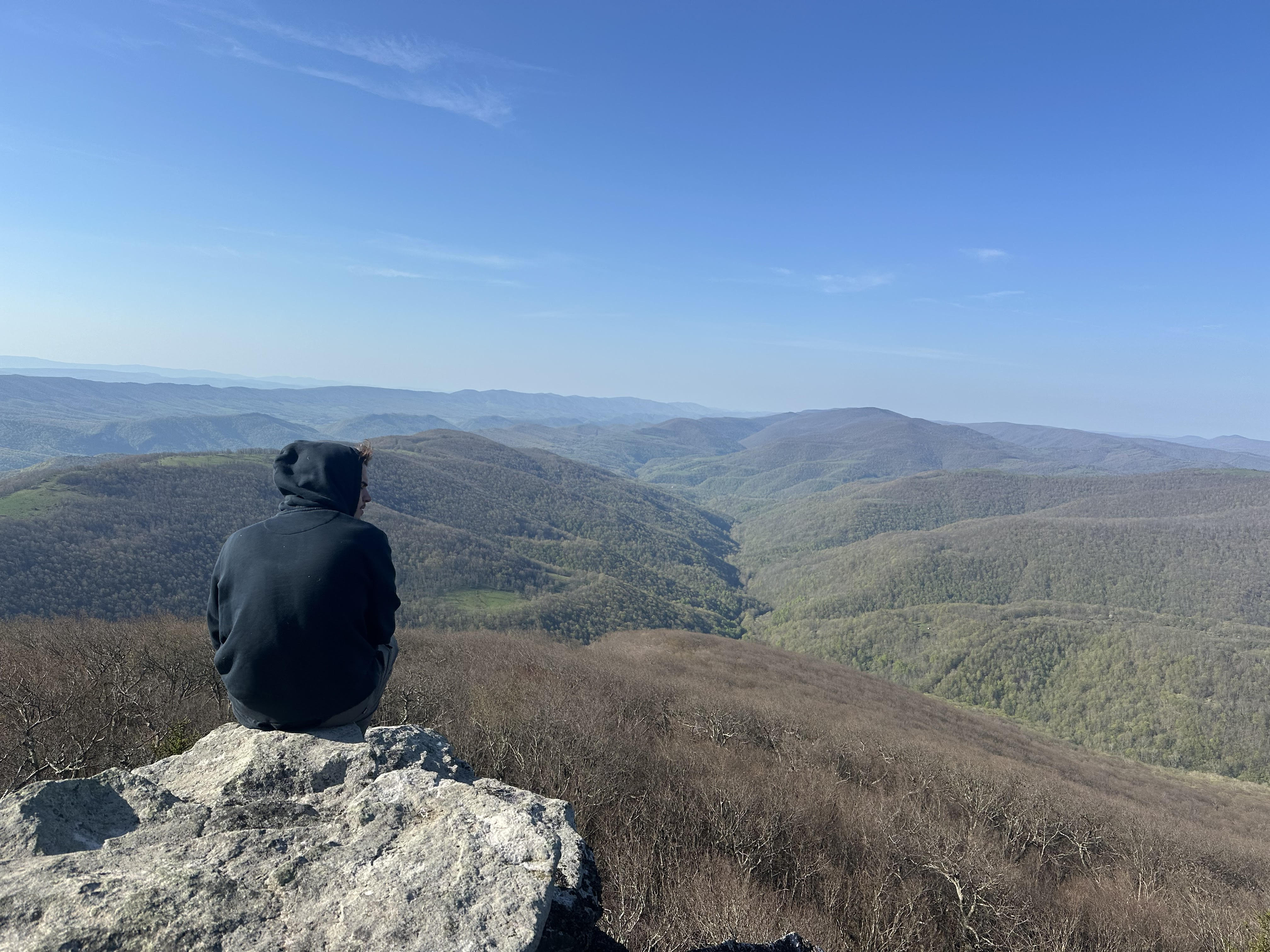
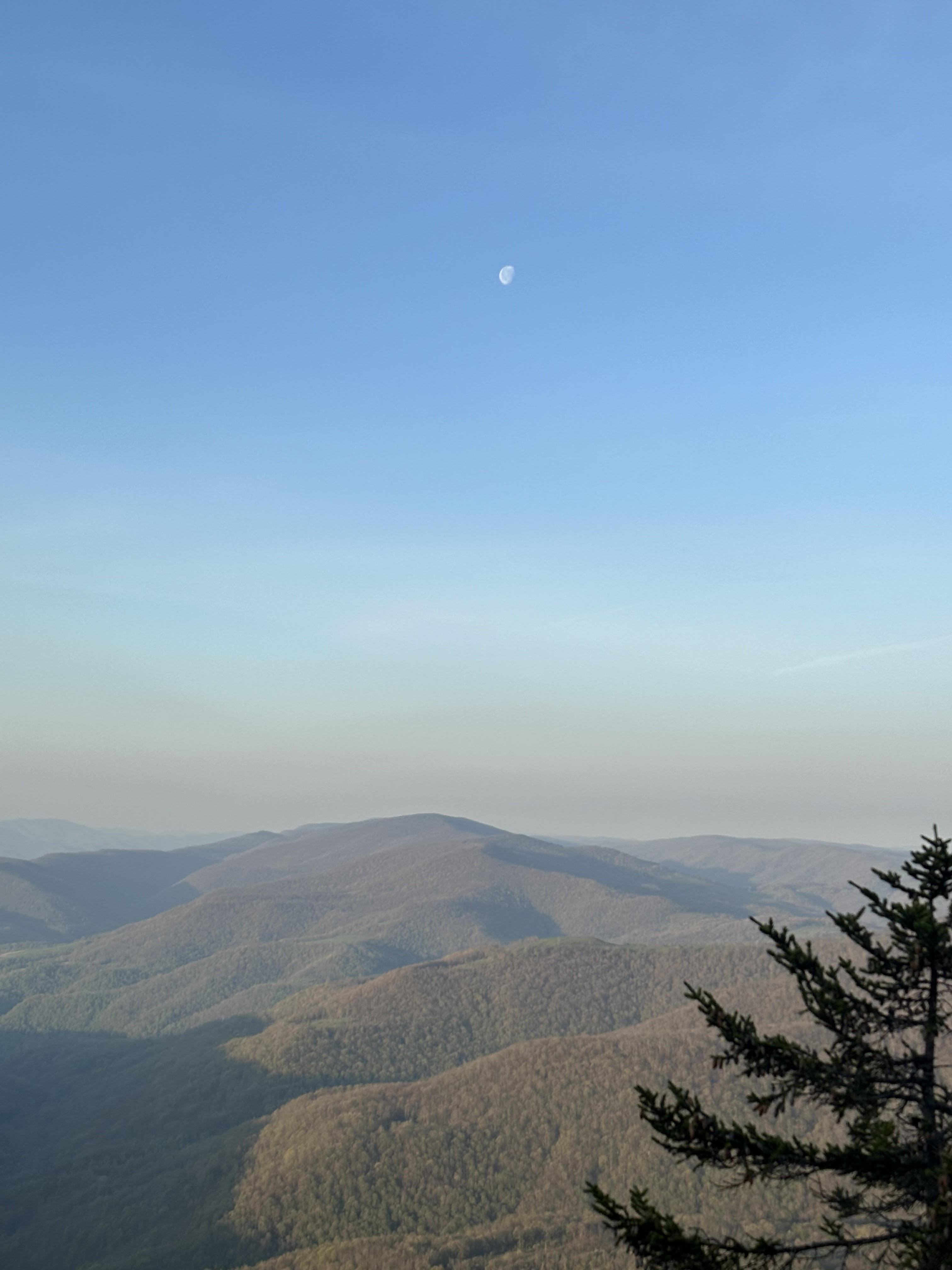
From April 26 to April 28 I hiked about 20 miles with my cousin and some friends in the area around the Dolly Sods wilderness in West Virginia. First was a quick summit of Seneca Rocks, a pretty impressive and unique precipice for east coast wilderness. The hike covered a decent amount of elevation gain but had a lot of switchbacks so it wasn’t very difficult.
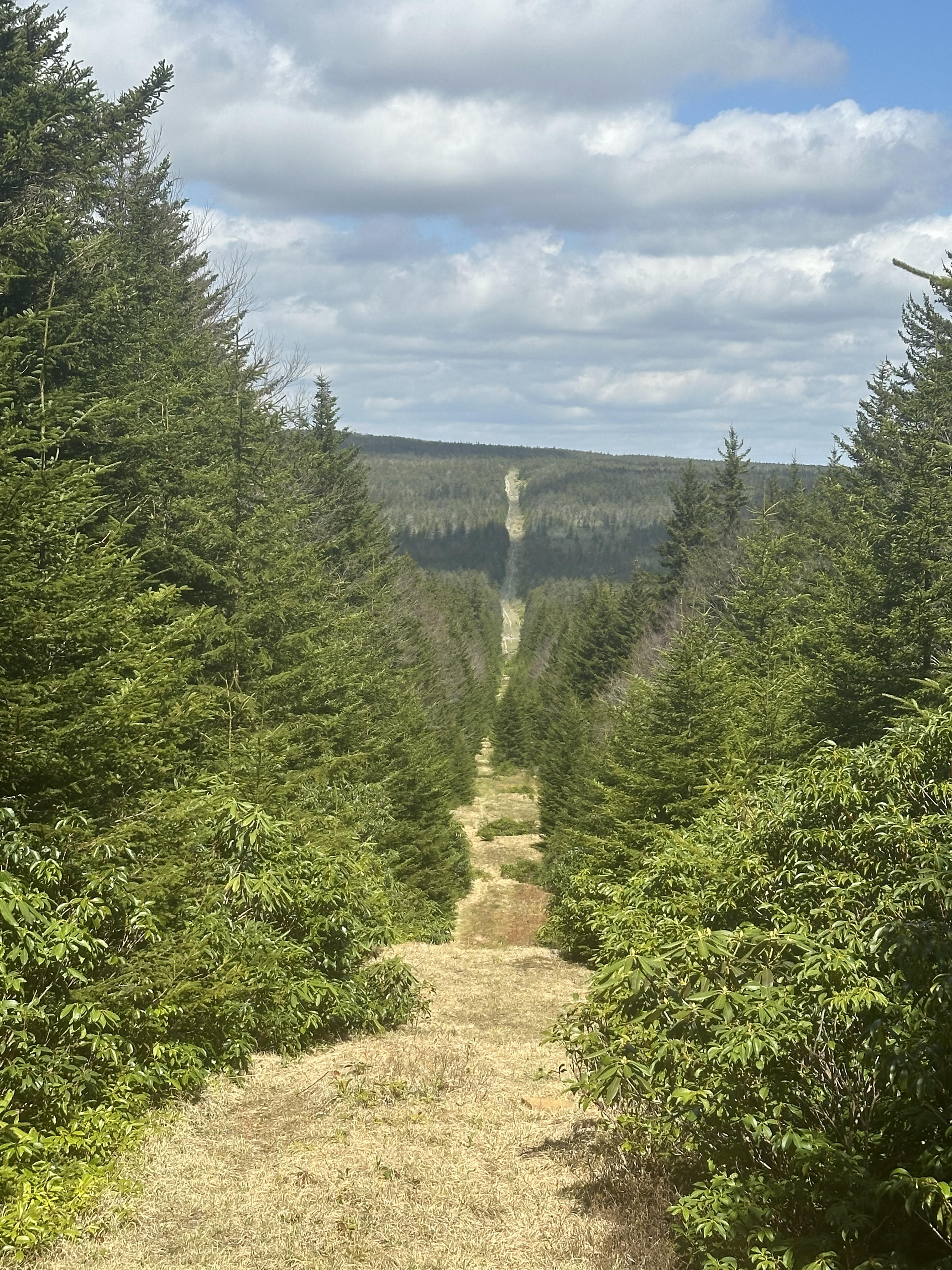
After Seneca Rocks we gathered our backpacking supplies and head out to do about 16 or 17 miles through the roaring plains wilderness (located within Dolly Sods) over 2 days. This part of the hike was extremely cool. It began with a long and flat walk along an access road before we got to the actual trail head. It was especially interesting to watch the landscape change from a pretty typical deciduous forest. which was still waking from its winter slumber, to an out of place alpine coniferous forest, which is pretty much what the entirety of the roaring plains wilderness is. While I was hiking I did not know why this environment was so different from the woods surrounding it, but my uncle explained it to me when I got back and told him about it. In the surrounding woods the woods were much like they were every where else on the east coast, tall trees (usually oaks, or tulip poplars with maples and sweet gums sprinkled in) with a spacious understory and pretty rocky soil. The Dolly Sods woods were almost all pine and spruce trees with a very thick under story, or sometimes just plains of rhododendrons and other woody shrubs. This is, according to my uncle, because the whole area was clear cut in the civil war era before eventually being replaced with mostly red spruce trees. This stand of trees that are not commonly found in such high concentration caused a change in the local climate. The mountains here almost create their own rain, which caused a couple of sketchy moments while hiking when the sky would suddenly begin pouring down despite no rain in the forecast. This also meant the trail (which was less then the width of one person for the entire trail) was sometimes completely submerged in a couple inches of water. The unique ecology made for moderately challenging hiking. Pushing through thick brush. Walking through deep mud. Untraveled paths which were difficult to follow. But it also made for a terrific and new experience in the outdoors. It truly felt like walking on a planet where things were just different enough from our own to feel uncanny. It was plants and terrain I recognized, but in combinations that I had never been near.
The actual hiking and camping wasn’t very eventful. It was wonderful to make new friends, and to have a relaxing campfire 50 miles from any place with cell phone reception. And there were times we ran low on water due to poor planning and an unexpected lack of flowing water in the woods. But for the most part we all made it out with no injuries, everyone was able to eat their fill. And the first time backpackers with us had great new stories from a singularly unique place.
My next planned trip will cover about 90 miles, completing the remainder of the Shenandoah National Park, and will begin within the next week. I look forward to getting back on the Appalachian Trail and to continue making progress towards my goals!

 Peter White
Leave a comment